
Recruiting tips
The tap and the bucket: five places your hiring leaks
Why a vacancy stays open: five checks to find unclear role expectations, weak candidate offers, unsuitable sourcing and slow hiring decisions.
A vacancy stays open for months. The job post is live, the salary looks competitive, the recruiter reviews résumés every day — and the right person still isn’t there. The usual reaction is to find one more job site and look for candidates there.
Sometimes that does help. If the problem lies in the process, a new channel only increases the workload.
How the tap and the bucket work
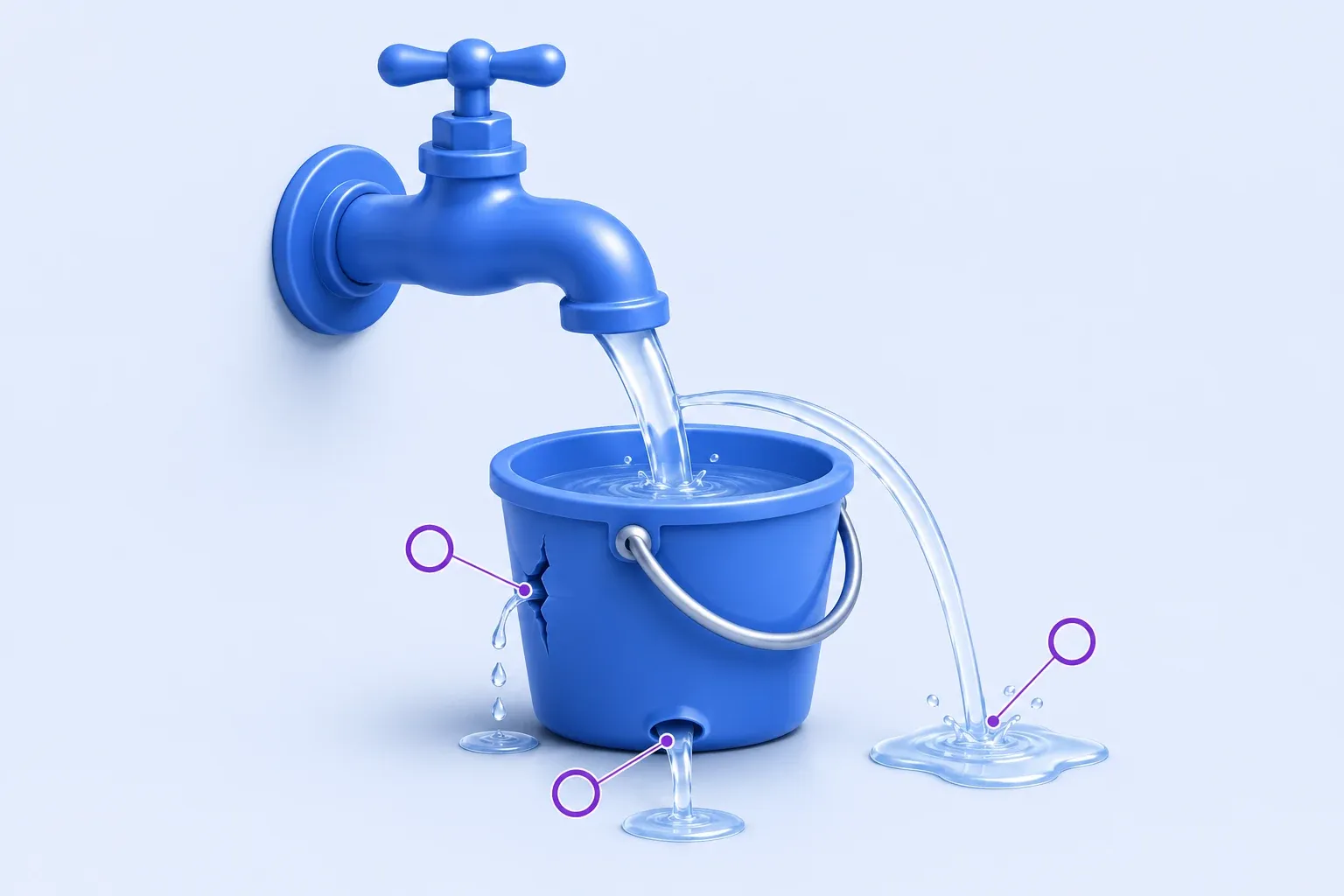
Picture hiring as a tap and a bucket. The tap is your sourcing channels. The water is candidates. The bucket represents selection, and its outlet represents an accepted offer. This is a model of candidates moving through a process rather than collecting in it.
When the bucket is empty, the instinct is to open the tap wider. But the bucket may be the wrong one, overflowing, full of holes, or sealed at the bottom. Each of these pictures has its own cause, its own symptoms and its own fix. Below are the five points to check before you add another channel.
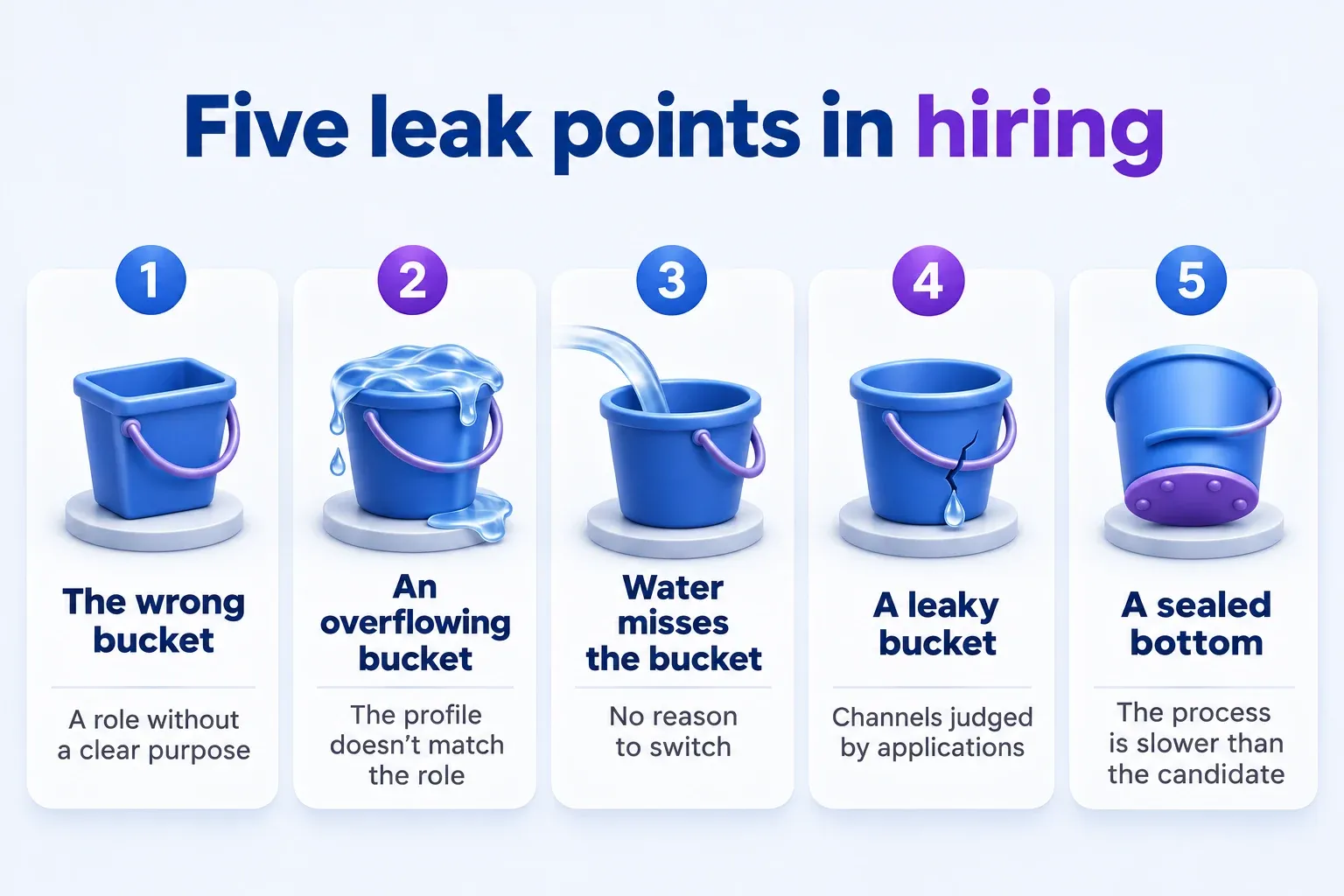
1. Water pours into the wrong bucket: a role without a clear purpose
The company opens a vacancy from an old description, even though the business, the team structure and the scope of responsibility have changed. A new role has a different problem: the people involved in hiring haven’t yet agreed why it exists and what result the person will own.
In that situation you can hire the strongest candidate on the market — and they won’t succeed. Not because they are weak, but because they were put in the wrong context and given the wrong tasks. One manager expects strategic decisions, another expects daily operations, and the new hire finds out only after starting.
Symptom: people get hired but don’t deliver, or leave during probation.
Check: what measurable result should this role produce within a year? If the hiring manager can’t answer, it is too early to publish the vacancy.
2. The bucket overflows: the profile doesn’t match the role
There are plenty of applications, but no suitable candidates among them. The recruiter is drowning in résumés, and after every interview the manager says “not quite.”
Consider a hypothetical building-materials company hiring sales representatives. Its job post mentions experience and product knowledge, but the manager needs someone who can own a territory and make decisions during negotiations.
The team should clarify the assessment criteria and rewrite the role description around decisions, expected results and available support. It can then check whether the share of suitable applicants changes. Rewriting the post alone does not guarantee a hire.
The chain is simple: the wrong profile leads to the wrong job description, and the wrong description leads to the wrong applications.
Symptom: many applications, few interviews, even fewer finalists.
Check: which three or four competencies truly determine success in this role, and which requirements stayed in the post out of habit?
3. Water misses the bucket: no reason to switch
A candidate sees the vacancy but doesn’t apply. Or agrees to a first call and then disappears, because they didn’t hear a convincing reason to change jobs. People the recruiter reaches out to directly politely decline.
This leak is hard to observe: the team cannot see the people who read the vacancy and chose not to apply. Check whether the post explains what candidates get as clearly as what the company expects: impact, team, conditions, scope and growth.
Symptom: few applications even on a good job site, many refusals at first contact.
Check: what will the right candidate get beyond a task list and a salary? The answer has to be specific and sound the same in the job post and in the interview.
4. A leaky bucket: channels judged by the number of applications
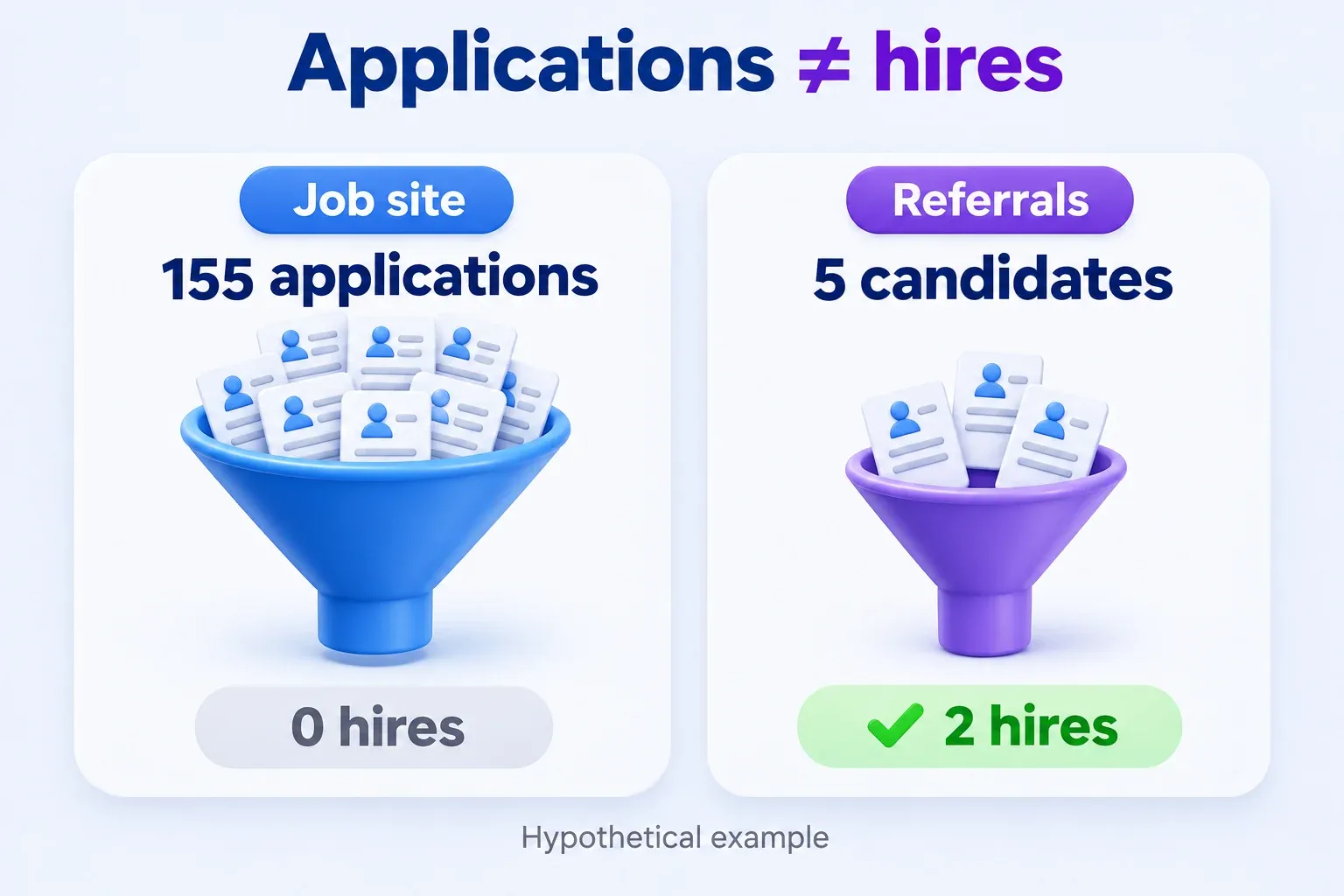
A large flow of résumés doesn’t mean a channel works. A hypothetical example: a vacancy got 155 applications from a job site and only 5 candidates through employee referrals. Two people were hired from the referrals; none from the 155.
If you look only at volume, the first channel seems to win. If you look further down the funnel, it took the most time and produced no hires. However much money and effort you pour into such a channel, it drains away.
Symptom: the recruiter is constantly busy sorting applications, yet hires don’t increase.
Check: which channels brought people who meet the role’s requirements and stayed with the company after probation?
5. A sealed bottom: the process is slower than the candidate
The role is defined, the profile is accurate, the job post is clear, the candidates are found. Yet nobody reaches a job offer.
The weak spots of the process show up in the calendar: long approvals, a week without an answer, an extra stage, a rescheduled meeting, no one available to make the decision. While one company is thinking, another is already hiring. Sometimes a candidate receives another offer on the way home from your interview.
Symptom: good candidates drop off between stages or decline at the very end.
Check: how many days pass between stages, and who owns the next decision? If there are no deadlines and no owners, the team has lost control of the process.
Why recruiters may start with sourcing channels
A recruiter directly controls two things: sourcing channels (if they have a budget for them) and part of the process — how fast to respond and whether to give candidates feedback. The role, the profile and the offer are a shared responsibility with the hiring manager and company leadership.
So when a vacancy won’t close, the recruiter may do what is within reach: looks for a new channel. But if the leak is in the role or the offer, a new channel only adds workload and makes the existing problem more expensive.
Why a vacancy stays open: check the symptoms
Start with the symptom:
- almost no applications — check the offer to candidates and your sourcing channels;
- many applications, but no suitable candidates — revisit the profile and screening criteria;
- candidates pass interviews but don’t get offers — check how candidates are assessed and how decisions are made;
- candidates decline at the end — compare conditions, communication and the speed of the process;
- new hires leave during probation — go back to the purpose of the role and the expectations set before hiring.
A new channel is needed only when the team has confirmed that the problem really is reach.
For an audit, take one problem vacancy. Agree why the role exists, who the company needs and why a candidate should consider it. Then check which channels produce hires and where the process loses time.
Related practical guides
Once you identify the delay, the Recuite hiring pipeline can help your team follow each candidate through the stages.