
Recruiting tips
Three hiring myths: money, advertising and AI
When pay, advertising and AI can help hiring, and when they leave the real problem untouched. What to check before changing your budget or process.

Three hiring myths give individual tools more credit than they deserve. When a vacancy stays open too long, a team may suggest these fixes: raise the salary, add more advertising, or hand screening over to AI. Each of these can sometimes be the right call. But all three share a flaw: they look for an external lever where the problem sits inside the process.
Myth 1. A higher salary will bring the right people
Competitive pay can address an important reason for declining if candidates identify compensation as the problem. It will not clarify vague responsibilities or shorten slow approvals. Measure application volume, candidate suitability and offer acceptance separately.
Wanting higher pay does not make someone unreliable. Frequent job changes alone do not determine professional ability either; discuss the reasons for each move.
When reviewing the budget, clarify the rest of the offer: responsibility, team, success criteria, working hours and influence on decisions. If pay falls below target candidates’ expectations, treat that as a separate constraint rather than explaining it away as a motivation problem.
Myth 2. Recruiters search badly, so we need more advertising
Sometimes the search really is weak. But the answer isn’t “more,” it’s “better targeted.” Choose the channel for the role and for where the right people actually are. For a cashier, the main source will be a post on a job site. For a brand manager, an agency may not publish the vacancy at all: the search goes through its own database, professional communities and direct contacts at companies where such specialists work.
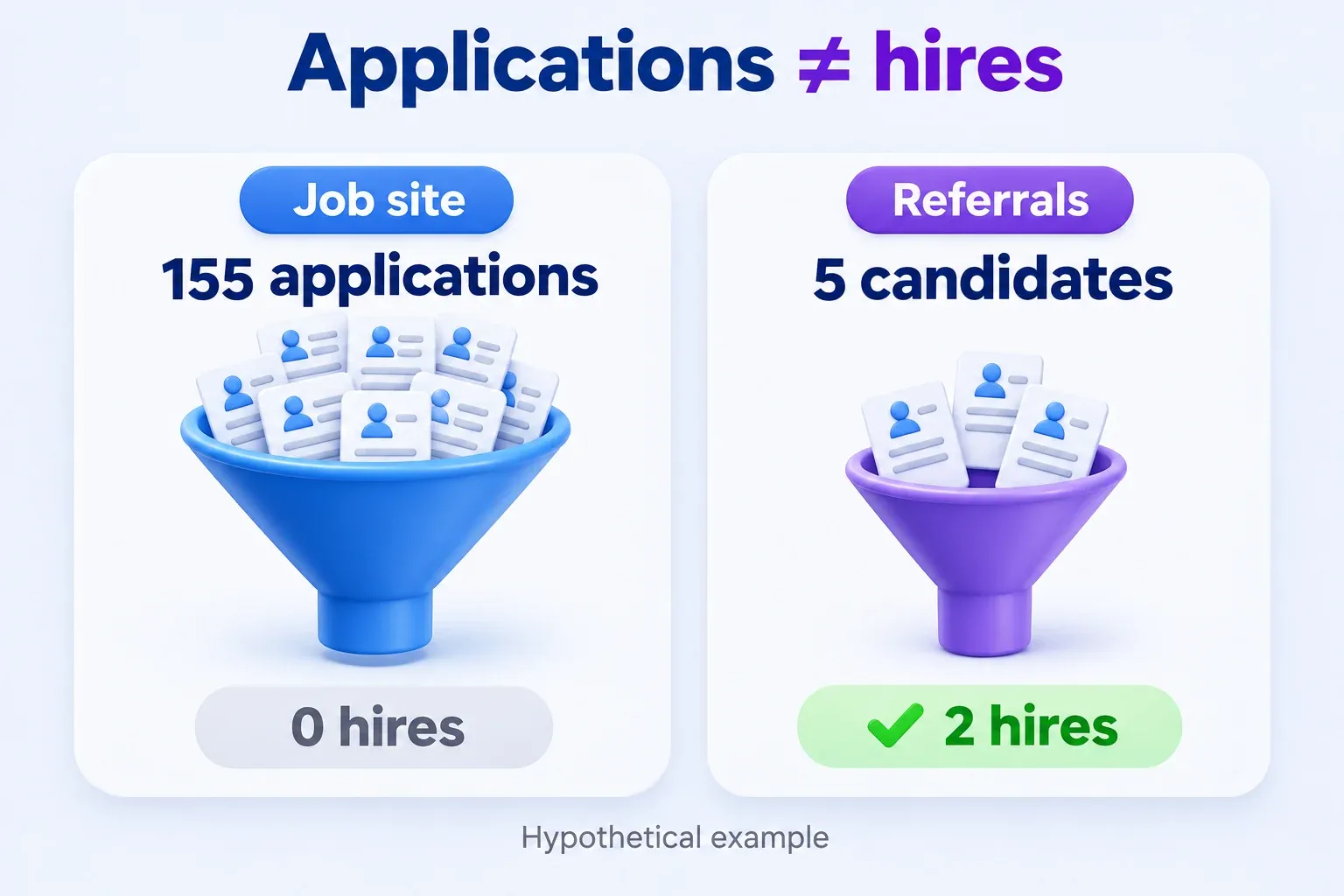
When a team starts counting where its candidates come from — not just the ones who get hired but the ones who stay — it often turns out that advertising isn’t the source at all. The ad budget can then be redirected to the channels that actually bring people.
A historical example is Zappos: in 2014, the company removed most ordinary job ads from its website and built Insiders, a program for long-term engagement with potential candidates. LinkedIn Talent Solutions describes why the program was launched and its first results. It isn’t a universal model, but it shows that sometimes what needs to change isn’t the amount of advertising but the way you build a talent pool.
The same goes for employee referrals. A “bring a friend” program wears out over time: people forget about it or have already referred everyone they know. You can revive it by updating the terms, reminding people regularly and running contests for the best referral.
It is better to judge a channel by how candidates move down the funnel: how many passed initial screening, reached the final stage, accepted the offer and completed probation.
Myth 3. AI will solve screening on its own
Automation speeds up routine work, but it doesn’t fix the criteria the team built into the process. If the role profile is vague or the filters rely on overly rigid formal signals, the system will simply scale those limitations. Without a review of the criteria, automation can repeat the same errors faster.
Harvard Business School’s research on “hidden workers” describes how traditional hiring processes screen out qualified people on formal criteria such as career gaps or unconventional experience. A separate ACL 2024 experiment asked models to generate hiring-decision emails. Acceptance rates varied with the applicant’s name and the prompt template. This was an experimental setup, not an audit of every commercial screening tool. That doesn’t mean every tool is biased. But before trusting automation to rank people, test it on your own cases.
AI is useful for structuring résumés, transferring data, drafting emails and interview questions. Assessment criteria, checking the results and decisions about candidates should stay with the team.
Three hiring myths: what to check first
In all three cases the team looks for a quick external fix: more money, more reach, a new tool. Yet the problem often sits inside — in a vague role, an inaccurate candidate profile, a weak offer or slow decisions.
Before increasing the budget or automating screening, check one problem vacancy against five questions: why the role exists, who you need to find, what the candidate gets, which channels bring suitable people and where the process loses time.
Related practical guides
- Five questions to ask a vacancy before you publish it
- The tap and the bucket: five places your hiring leaks
If you are reviewing recruiting tools, compare your needs with Recuite’s features.